
First Aid Training Norwich: 10 Things You Should Know About the Latest Resuscitation Guidelines
- ACMS Training
- Feb 23
- 6 min read
In a cardiac arrest, every second counts. The Resuscitation Council UK has just released updated guidelines for 2025/2026 that fundamentally change how we respond to life-threatening emergencies: and if your team hasn't been trained on these new protocols, they're working with outdated information that could cost lives.
At ACMS Training, our first aid training courses in Norwich are already updated to reflect these latest standards. Here are the 10 critical changes you need to know about: whether you're booking training for your workplace, refreshing your own skills, or ensuring your organisation meets its legal duty of care.
1. CALL 999 IMMEDIATELY: DON'T WAIT TO CHECK BREATHING
This is the biggest shift. Previously, you'd check for breathing before calling for help. Now, the moment someone becomes unresponsive, you call 999 straight away.
Why the change? Because cardiac arrest can present without obvious signs, and brain damage begins within 3-4 minutes without oxygen. The new protocol eliminates delay: you get emergency services en route while you assess the casualty. The call handler will guide you through CPR if needed, and every second you've saved by calling early increases survival chances.
Your team needs to understand this instinctively. In our first aid courses Norwich businesses trust, we drill this sequence until it becomes second nature: check responsiveness, shout for help, call 999, then assess breathing while the call connects.
2. ABNORMAL BREATHING MEANS CARDIAC ARREST: START CPR NOW
Gasping, gurgling, or irregular breaths aren't "breathing": they're agonal respirations, a sign the heart has stopped effectively pumping blood. The updated guidelines emphasise this distinction because bystanders often hesitate, thinking the person is still breathing.
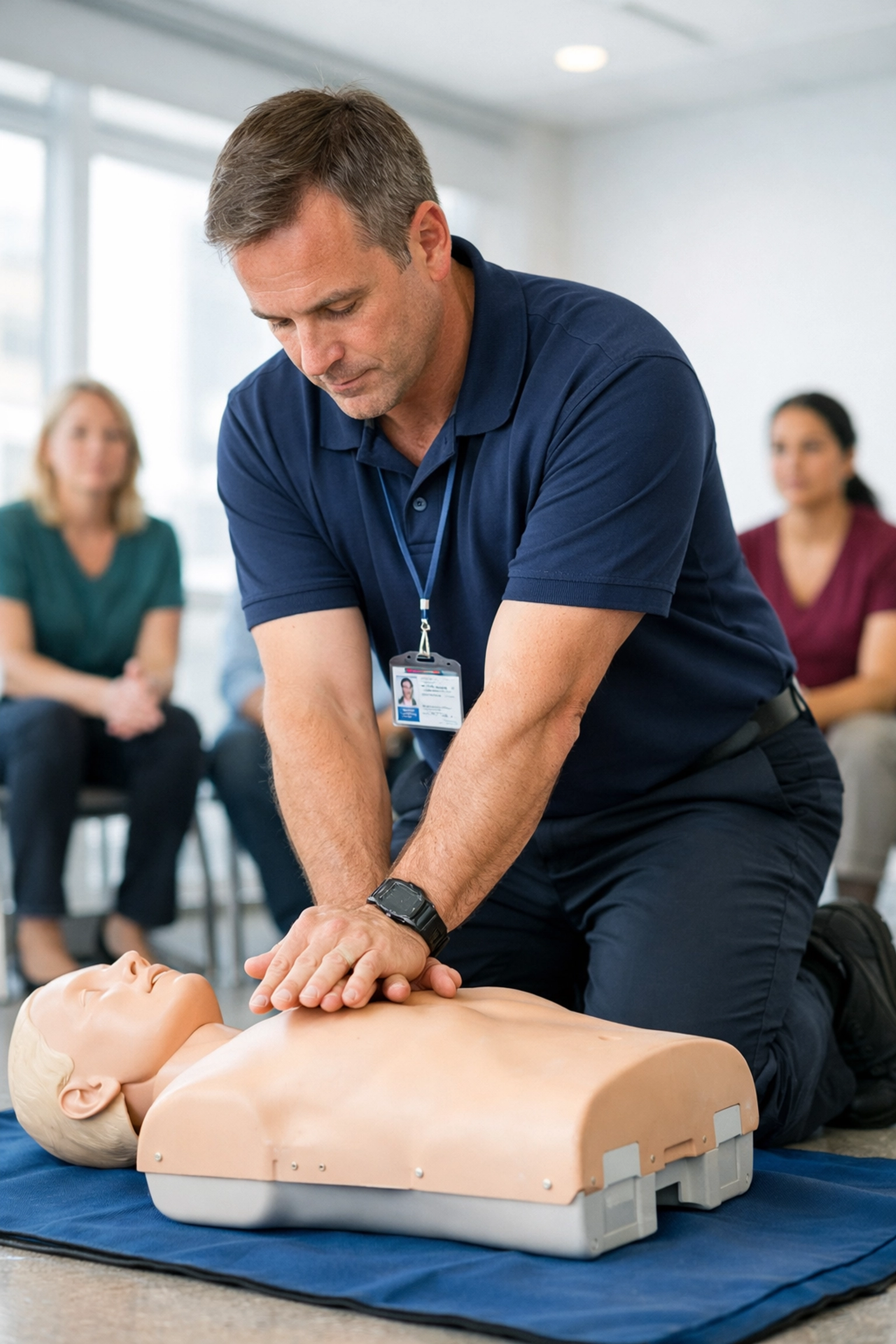
If someone is unresponsive and their breathing sounds abnormal, treat it as cardiac arrest. Start CPR immediately: 30 chest compressions followed by 2 rescue breaths if you're trained, or continuous compressions if you're not confident with breaths.
This clarity saves lives. Hesitation kills. Our instructors at the Norwich training centre equip you to recognise these signs instantly and act without second-guessing yourself.
3. FIRST AID EDUCATION SHOULD START FROM AGE 4-6
The Resuscitation Council UK now officially recommends introducing basic life-saving skills to children as young as four. Why? Because emergencies don't discriminate by age, and even young children can learn to recognise danger, call for help, and perform basic CPR techniques.
This recommendation extends beyond schools: community organisations, sports clubs, and family learning programmes should all consider age-appropriate first aid education. Early training builds confidence, removes fear, and creates a generation of competent first responders.
While our standard paediatric and first aid at work courses focus on adult learners, we can advise organisations on developing youth-focused programmes that align with these new guidelines.
4. THE NEW ABCDE APPROACH IS NOW CENTRAL TO FIRST AID
The 2025/2026 guidelines include a comprehensive new chapter on first aid that formalises the ABCDE systematic approach:
Airway : Is it open and clear?
Breathing : Is the person breathing normally?
Circulation : Are there signs of life-threatening bleeding?
Disability : What's their level of consciousness?
Exposure : Are there injuries you haven't yet identified?
This structured assessment method: borrowed from advanced medical practice: gives first aiders a clear mental framework for managing emergencies without missing critical issues. You work through each letter systematically, prioritising life-threatening problems in order.
Our Norwich training sessions walk you through real-world scenarios using the ABCDE approach, so when faced with a complex emergency, you know exactly where to start.

5. PAEDIATRIC CPR RATIOS HAVE CHANGED FOR TRAINED RESPONDERS
If you're trained in paediatric first aid, you'll now use a 15:2 ratio for children and infants: that's 15 compressions followed by 2 rescue breaths. This change reflects evidence that children and infants in cardiac arrest often have respiratory causes, making rescue breaths more critical than in adult arrests.
However, if you're an untrained bystander or uncomfortable giving breaths, the guidance remains clear: use the adult 30:2 ratio or provide compression-only CPR. Some CPR is always better than no CPR.
For workplaces, schools, nurseries, and care settings in Norwich, this means your designated first aiders need refresher training on these updated ratios: especially if they last trained before 2025.
6. NEW INFANT CPR TECHNIQUE: THE THUMB-ENCIRCLING METHOD
For healthcare professionals and trained first aiders performing CPR on infants, the guidelines now recommend the thumb-encircling technique as the preferred method when two rescuers are present.
Here's how it works: you place both thumbs side-by-side on the lower half of the infant's sternum, with your fingers encircling the chest and supporting the back. This provides more effective compressions and reduces rescuer fatigue compared to the two-finger technique.
If you're working alone, the two-finger technique remains appropriate: but if you have a colleague present, the thumb-encircling method is now gold standard.
This level of detail matters. Our instructors don't just tell you what to do: they show you, correct your hand positioning, and ensure you're confident before you leave the training room.
7. EMPHASIS ON EMOTIONAL SUPPORT AFTER AN INCIDENT
One of the most important: and often overlooked: updates is the formal recognition that first aiders need psychological support after traumatic incidents. Performing CPR, especially if unsuccessful, can have lasting emotional impact.
The new guidelines explicitly recommend that organisations provide:
Immediate debriefing after serious incidents
Access to professional counselling services
Peer support networks
Clear pathways for first aiders to discuss their experiences without stigma
At ACMS Training, we don't just teach the technical skills: we prepare your team for the emotional reality of emergency response. We discuss psychological first aid for responders and help you develop workplace policies that protect your first aiders' mental health.
This ties directly to our first aid for mental health training, which complements physical first aid skills beautifully.

8. AED USE IS SIMPLER THAN EVER: AND MORE CRITICAL
Automated External Defibrillators (AEDs) continue to be emphasised as essential in cardiac arrest survival. The updated guidelines reinforce that AEDs are designed for lay responders: they're safe, effective, and virtually foolproof.
The device talks you through every step. You can't shock someone accidentally. And using an AED within the first 3-5 minutes of collapse can increase survival rates to over 70%.
If your Norwich workplace doesn't have an AED yet, now's the time. And if you do have one, make sure your team knows where it is and feels confident using it. Our first aid training in Norwich includes hands-on AED practice with training units, so there's no hesitation when it counts.
9. UPDATED GUIDANCE ON CHOKING AND AIRWAY OBSTRUCTION
While CPR gets most of the headlines, the new guidelines also refine protocols for choking management. The back blows and abdominal thrusts sequence remains, but there's clearer guidance on when to stop attempts and move to CPR if the person becomes unconscious.
For pregnant women and obese casualties, chest thrusts replace abdominal thrusts: a detail that's often missed in outdated training.
These nuances matter in real emergencies. Muscle memory developed through practical training beats theory every time, which is why our Norwich courses prioritise hands-on practice over PowerPoint presentations.
10. FLEXIBLE FIRST AID TRAINING OPTIONS IN NORWICH
Here's the practical bit: getting your team trained on these 2025/2026 guidelines doesn't have to disrupt your business operations. ACMS Training in Norwich offers flexible scheduling, on-site training options, and convenient facilities with free parking.
Whether you need Emergency First Aid at Work (1 day), full First Aid at Work (3 days), or specialised paediatric training, we'll work around your diary. Our Norwich training centre is centrally located, easily accessible, and equipped with the latest training manikins and AED units that reflect current guidelines.
We're accredited, our instructors are experienced, and we keep our course sizes manageable so everyone gets individual attention and coaching.
DON'T WAIT FOR AN EMERGENCY TO DISCOVER YOUR TRAINING IS OUTDATED
The 2025/2026 Resuscitation Council UK guidelines aren't optional updates: they represent evidence-based improvements that increase survival rates. If your team trained before these changes, their knowledge has gaps that could prove critical.
BOOK YOUR FIRST AID TRAINING IN NORWICH TODAY: EQUIP YOUR TEAM WITH LIFE-SAVING SKILLS THAT MEET THE LATEST STANDARDS. FREE PARKING. FLEXIBLE SCHEDULING. EXPERT INSTRUCTORS.
Call ACMS Training now or visit our first aid training page to check upcoming course dates. When an emergency happens in your workplace, you'll be ready: and that preparation could mean the difference between a tragedy and a save.
BECOME THE VITAL RESPONDER YOUR WORKPLACE NEEDS.
Comments