
Equality in the Field: Championing Women in Health and Safety
- ACMS Training
- Mar 9
- 6 min read
Women remain underrepresented in health and safety roles across the UK, yet their contributions are reshaping workplace safety culture for the better. At ACMS Training, we've seen firsthand how diverse teams create stronger safety outcomes: and this International Women's Day, it's time to champion the women leading the charge.
The health and safety profession has traditionally been male-dominated, particularly in sectors like construction, manufacturing, and offshore energy. But that landscape is changing. Women are bringing fresh perspectives, collaborative leadership styles, and evidence-based approaches that are transforming how organisations think about risk management and employee wellbeing.
WHY REPRESENTATION MATTERS IN SAFETY
Gender diversity isn't just about ticking boxes: it's about building safer workplaces. Research consistently shows that diverse teams spot hazards others might miss, challenge groupthink, and create more inclusive safety cultures where everyone feels empowered to speak up.
Women in health and safety roles often excel at communication, relationship-building, and creating psychologically safe environments where workers feel comfortable reporting near-misses or raising concerns. These soft skills: which are anything but soft when it comes to preventing incidents: complement technical safety knowledge beautifully.

When your safety team reflects the diversity of your workforce, you're more likely to identify risks that affect different groups. A woman might spot ergonomic issues in PPE designed primarily for male body types. She might recognise how shift patterns impact working parents differently. She might champion mental health initiatives or challenge "tough it out" cultures that prevent early intervention.
That's not to say men can't do these things: but diversity of thought stems from diversity of experience. The more perspectives you have around the table, the more comprehensive your risk assessments become.
THE CURRENT STATE OF WOMEN IN H&S
Women now make up approximately 30% of health and safety professionals in the UK, a significant increase from a decade ago but still well short of parity. The numbers drop further at senior levels, with women holding fewer than 20% of director-level safety positions in traditionally male-dominated industries.
Several barriers persist. Women entering construction or manufacturing safety roles often find themselves the only woman in the room: or on the entire site. This isolation can be challenging, particularly when dealing with entrenched workplace cultures that haven't always welcomed diversity.
Career progression presents its own hurdles. Women report fewer mentorship opportunities, less visibility for their achievements, and occasional assumptions about their technical competence. Balancing demanding site visits or offshore rotations with caring responsibilities adds another layer of complexity that organisations don't always accommodate well.
Yet despite these challenges, women continue to enter the profession in growing numbers: drawn by the opportunity to make a genuine difference in people's lives and working conditions.
DIVERSE TEAMS BUILD BETTER SAFETY CULTURES
The evidence is compelling. Organisations with diverse safety leadership teams report higher engagement scores, better incident reporting rates, and more proactive safety behaviours across their workforce. When people see themselves reflected in safety roles, they're more likely to take ownership of safety rather than viewing it as something imposed from above.

Women leaders often bring collaborative approaches that contrast with traditional command-and-control safety management. They're more likely to ask "What do you think?" rather than tell. They build relationships before they need them, creating trust that becomes invaluable during investigations or culture change initiatives.
This doesn't mean women are inherently "better" at safety: it means different leadership styles and communication approaches resonate with different people. A diverse safety team can flex its approach depending on the audience, the situation, and the challenge at hand.
Diverse teams also challenge assumptions more effectively. When everyone in the room shares similar backgrounds and experiences, blind spots multiply. Add different perspectives, and suddenly someone's questioning why you've always done it that way, whether that control measure actually works for everyone, or if there's a better solution you haven't considered.
SUPPORTING WOMEN IN HEALTH AND SAFETY ROLES
Creating genuine opportunities for women in health and safety requires more than good intentions: it demands deliberate action from organisations and training providers alike.
Accessible training pathways make a crucial difference. At ACMS Training, we've designed our health and safety training programmes to accommodate different learning styles and life circumstances. Flexible scheduling, blended learning options, and supportive environments help women balance professional development with other commitments.
Professional qualifications like IOSH courses provide recognised credentials that open doors. When women hold the same accredited qualifications as their male peers, it reduces questions about competence and establishes credibility from day one.

Mentorship programmes accelerate career development and provide vital support networks. Women benefit enormously from mentors: both male and female: who can navigate organisational politics, champion their development, and provide honest feedback. Formal mentoring schemes signal that organisations are serious about developing diverse talent.
Inclusive workplace policies matter deeply. This means PPE that actually fits women's bodies, welfare facilities designed for mixed-gender workforces, flexible working arrangements that accommodate caring responsibilities, and zero tolerance for harassment or discrimination. Basic stuff, really: but still not universal.
Visible role models inspire the next generation. When young women see successful female safety professionals: speaking at conferences, leading major projects, holding senior positions: it makes those career paths feel achievable rather than exceptional.
Organisations should actively seek women for safety committee roles, project teams, and leadership development programmes. Not as token representatives, but as valued professionals whose perspectives strengthen decision-making.
THE BUSINESS CASE IS CLEAR
Beyond the moral imperative for equality, diverse safety teams deliver measurable business benefits. Better hazard identification reduces incidents. Inclusive cultures improve retention and reduce recruitment costs. Enhanced communication increases safety compliance. Broader perspectives drive innovation in risk management approaches.
Companies recognised as inclusive employers find it easier to attract top talent: increasingly important as skills shortages bite across many sectors. Your safety team's diversity becomes a competitive advantage in both the labour market and when competing for contracts with clients who value equality and inclusion.

Research from various sectors shows that diverse teams make better decisions roughly 87% of the time compared to homogeneous groups. When those decisions involve life-and-death safety matters, that statistical advantage translates into lives saved and injuries prevented.
PRACTICAL STEPS FOR ORGANISATIONS
If you're serious about supporting women in health and safety, start with these concrete actions:
Audit your current state. What percentage of your safety team is female? How does this vary by level? Where are the drop-off points in career progression? You can't improve what you don't measure.
Review your recruitment practices. Are job descriptions inadvertently gendered? Do you recruit from diverse networks? Are interview panels balanced? Small changes here yield significant results over time.
Invest in professional development. Support women pursuing management and leadership training alongside technical safety qualifications. Leadership skills matter as much as technical knowledge for career progression.
Create inclusive site environments. Proper welfare facilities, appropriate PPE, and professional behaviour expectations aren't special treatment: they're basic requirements for safe, productive workplaces.
Challenge poor behaviour immediately. Sexist comments, exclusion from discussions, or assumptions about capability damage both individuals and organisational culture. Leaders must intervene quickly and consistently.
LOOKING FORWARD
This International Women's Day, let's celebrate the women already excelling in health and safety roles: and commit to creating more opportunities for those following behind them. Every woman who enters the profession brings unique perspectives that strengthen safety for everyone.
The health and safety sector needs the best talent it can get. Limiting your recruitment pool to roughly half the population makes no sense when lives depend on expertise, diligence, and diverse thinking.
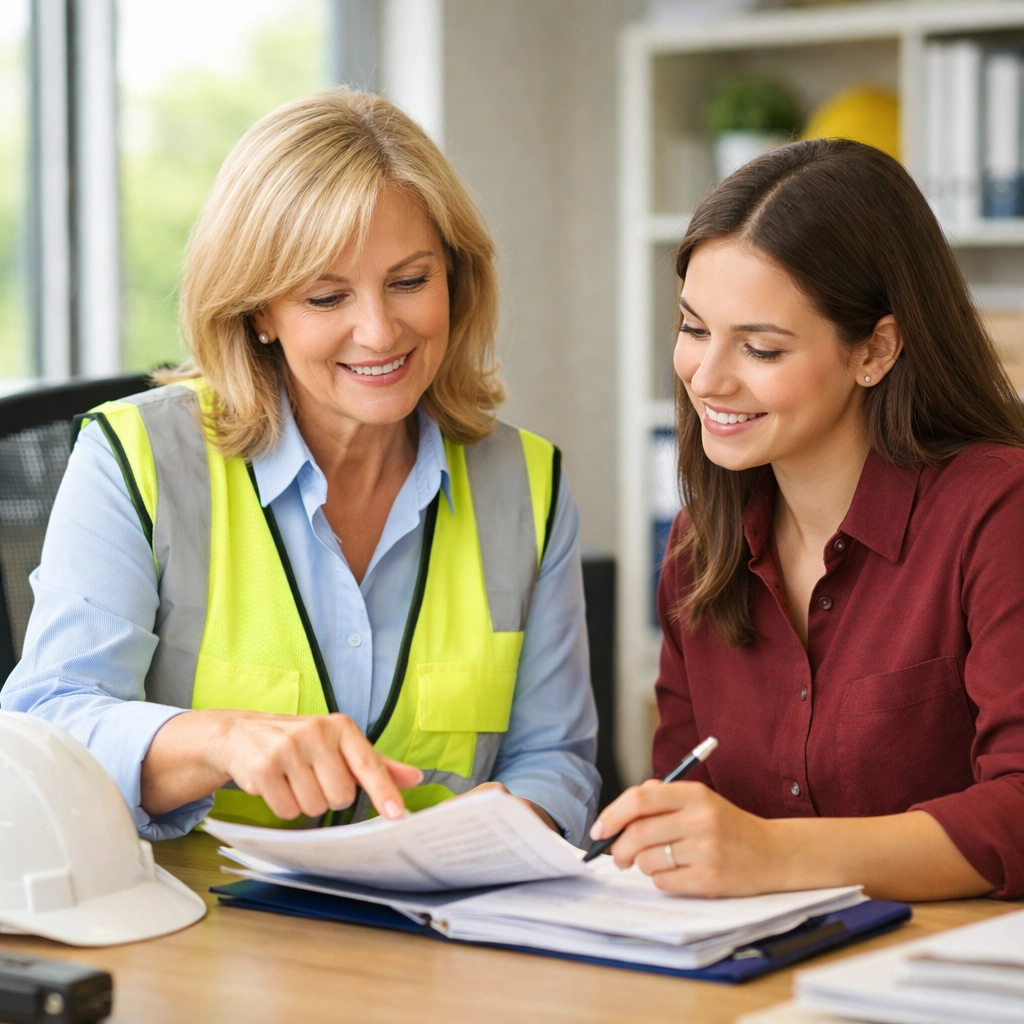
At ACMS Training, we're proud to support professionals of all backgrounds pursuing careers in health and safety. Our comprehensive course offerings: from first aid training to specialist programmes like working at height: equip people with the skills and credentials they need to excel in safety roles.
Women don't need special treatment to succeed in health and safety: they need equal opportunities, supportive environments, and recognition of the value they bring. When organisations commit to creating these conditions, everyone benefits from stronger safety cultures and better outcomes.
TAKE ACTION TODAY
Whether you're a woman considering a career in health and safety, a manager looking to diversify your team, or an organisation committed to equality: the time for action is now.
INVEST IN PROFESSIONAL DEVELOPMENT: BUILD SAFER, MORE INCLUSIVE WORKPLACES: CHAMPION THE WOMEN LEADING THE WAY.
Explore our upcoming courses and discover how accredited training opens doors to rewarding careers in health and safety. Visit our upcoming courses page or contact us to discuss how we can support your team's development.
EQUALITY IN SAFETY ISN'T JUST THE RIGHT THING TO DO( IT'S THE SMART THING TO DO.)
Comments